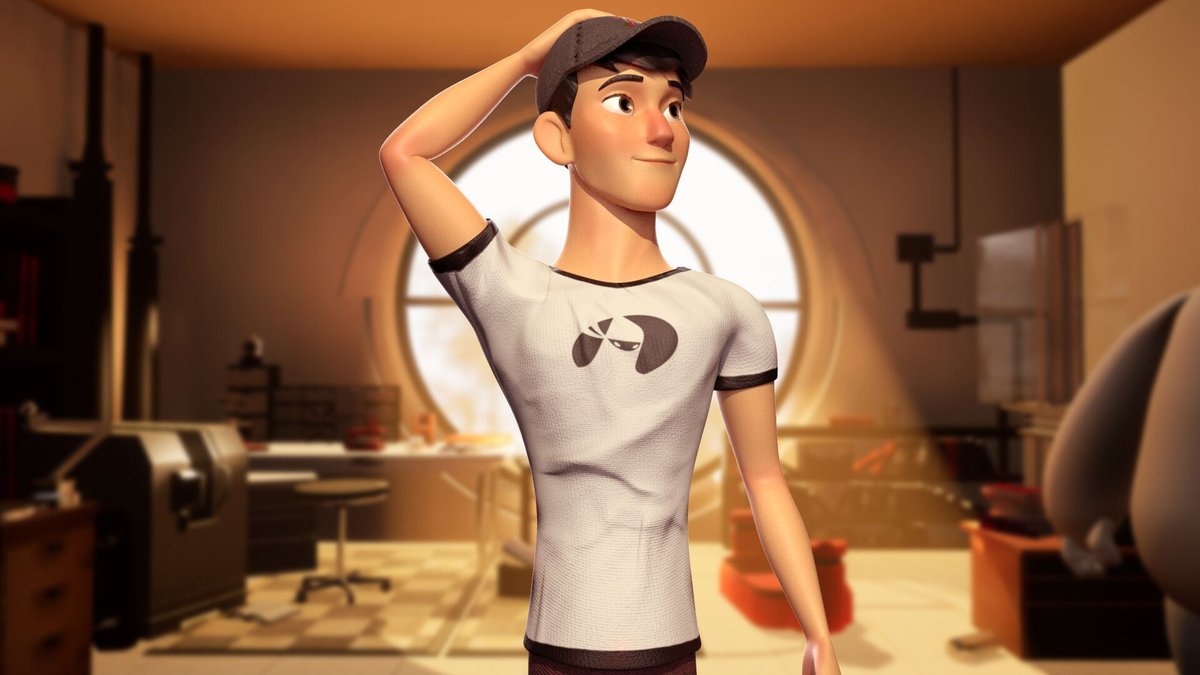
The impact of Tadashi Hamada on Disney's Big Hero 6 is nothing short of monumental. Though his physical presence in the film is tragically brief, the echo of his character, the catalyst of his death, and the profound reach of his legacy resonate through every frame, shaping the destiny of his younger brother, Hiro, and indeed, the entire city of San Fransokyo. It's a testament to powerful storytelling when a character, even a posthumous one, continues to inspire a rich tapestry of Tadashi Hamada's death, legacy, and fan theories that endure long after the credits roll.
We're going to dive deep into the heart of Tadashi's story, exploring the circumstances of his sacrifice, the incredible ripple effect of his life's work, and the creative "what ifs" that fans have imagined.
At a Glance: Understanding Tadashi's Enduring Influence
- Who was Tadashi? A brilliant, kind, and tirelessly optimistic robotics student, older brother to Hiro, and creator of the beloved healthcare companion, Baymax.
- His Defining Traits: Unwavering kindness, fierce dedication to helping others, intellectual genius, and a profound sense of responsibility for Hiro.
- His Tragic Death: Died saving lives in a mysterious fire at the San Fransokyo Institute of Technology (SFIT), trying to rescue his mentor, Professor Robert Callaghan.
- His Monumental Legacy: His perseverance inspired Baymax, who became Hiro's protector and moral compass. His life taught Hiro about using intellect for good and spurred the formation of Big Hero 6.
- Beyond the Film: Continues to appear in flashbacks and recordings in Big Hero 6: The Series, guiding Hiro's path.
- Fan Theories & Alternate Canons: Speculation around his survival, divergent storylines in prequel manga, and persistent questions about his true fate.
The Boy Behind Baymax: A Glimpse into Tadashi Hamada's Brilliant Life
To truly grasp the weight of Tadashi's story, we first need to understand the young man he was. Tadashi Hamada wasn't just Hiro's older brother; he was a guardian, a mentor, and a beacon of ingenuity. Raised by their Aunt Cass in the bustling Lucky Cat Café after being orphaned at a young age, Tadashi instinctively took on the role of protector for his younger, more impulsive sibling. He was the grounding force, the steady hand that gently steered Hiro away from back-alley bot fights and towards a future worthy of his extraordinary intellect.
At 18 (though some sources suggest he could be up to 21), Tadashi was a star student at SFIT, a testament to his innate curiosity and relentless work ethic. His mentor, Professor Robert Callaghan, recognized his brilliance, as did his close-knit group of friends: Wasabi, Go Go Tomago, Honey Lemon, and Fred. Tadashi's ambition wasn't about fame or fortune; it was about betterment. He yearned to "change the world for the better" through technology, a dream that materialized in his most significant creation: Baymax. He spent countless hours, enduring 84 frustrating tests, to perfect his personal healthcare companion, embodying a perseverance that would later inspire Hiro in the darkest of times.
Physically, Tadashi cut a distinctive figure: tall, slender, and subtly muscular, with warm brown eyes that often held a hint of gentle amusement. His neat black hair was almost always topped with his signature black baseball cap, emblazoned with red-and-gold San Fransokyo Ninjas lettering. His fashion sense leaned towards smart-casual – blazers, crew-neck t-shirts, and cardigans paired with mint-colored sneakers – reflecting his blend of academic seriousness and approachable warmth. But it was his character that truly defined him: an incredibly kind, encouraging, and optimistic soul, possessing an intellectual gift balanced with a deep understanding of empathy and human connection. He knew when to be understanding and when to be subtly sneaky, famously tricking Hiro into visiting SFIT by promising a bot fight, knowing full well it was the awe-inspiring campus that would truly captivate him.
He was in "excellent health," as Baymax would later state, athletic enough to teach Hiro karate, and carried the heavy mantle of responsibility for his brother with grace and dedication. Tadashi was, in every sense, a truly remarkable individual. To learn more about Tadashi Hamada, delve into the full depth of his character.
The Catalyst: Tadashi's Tragic End at SFIT
The central conflict of Big Hero 6 doesn't begin with a supervillain; it begins with an unbearable loss. Tadashi's death is the thunderclap that shatters Hiro's world and sets the entire narrative in motion. It occurs during the SFIT showcase, a night meant to celebrate innovation and academic achievement. After Hiro’s groundbreaking microbot presentation, a catastrophic fire erupts in the exhibition hall.
Tadashi, ever the hero, initially guides Hiro to safety. But upon learning from a panicked survivor that Professor Callaghan is still trapped inside, his unwavering dedication to helping others takes over. Without a moment's hesitation, he rushes back into the inferno. "Callaghan's in there! Someone has to help!" he cries, a line that perfectly encapsulates his selflessness and courage. Tragically, a massive explosion follows, and Tadashi is presumed dead.
This moment is not just a plot device; it's a gut-wrenching portrayal of sacrifice. Tadashi didn't die for glory or revenge; he died trying to save a life, embodying the very best of humanity. His final act is a direct consequence of his deeply ingrained kindness and bravery, making his loss all the more poignant. For Hiro, it’s an incomprehensible tragedy, plunging him into a spiral of grief and isolation. The brilliant, optimistic future Tadashi had envisioned for his brother seems to vanish in the smoke of the fire.
Unmasking the Truth: Callaghan's Betrayal
The initial mystery surrounding Tadashi's death—a seemingly accidental tragedy—unravels slowly, peeling back layers of deception. Hiro, guided by the nascent Baymax and his growing suspicion, eventually uncovers the horrifying truth: Professor Robert Callaghan, the very man Tadashi died trying to save, was not a victim, but the perpetrator.
Callaghan orchestrated the fire as a cover-up for stealing Hiro's revolutionary microbots, intending to use them for his own vengeful purposes. This revelation twists the knife in Hiro's wound, transforming his grief into rage. The man Tadashi revered as a mentor, the one he sacrificed himself for, proved to be a morally bankrupt villain. This betrayal deepens Hiro's pain, making forgiveness seem an impossible feat. It also highlights the ultimate contrast between Tadashi’s selfless integrity and Callaghan’s manipulative opportunism.
A Brother's Burden, A City's Hope: Tadashi's Profound Legacy
Tadashi Hamada's physical absence only amplified his spiritual presence. His legacy isn't merely about memories; it's about the tangible ways his life and death continued to shape the world he left behind.
The Unbreakable Bond: Tadashi and Hiro
The core of Tadashi's legacy lies in his relationship with Hiro. Tadashi had been Hiro's primary caregiver, role model, and emotional anchor for ten years. He bore the responsibility for his younger brother with grace, consistently pushing Hiro towards his full potential while providing unwavering moral and emotional support. Their bond was deep, built on shared secrets and an unspoken understanding, as highlighted in the book Hiro and Tadashi. Tadashi even gave Hiro invention journals, subtly nurturing his brother's genius.
After Tadashi's death, Hiro is utterly lost. His grief manifests as withdrawal and anger. It is through Tadashi’s direct influence—first Baymax, then the playback of Tadashi's own development footage—that Hiro begins to heal and rediscover his purpose. Tadashi's perseverance through 84 tests to perfect Baymax becomes a powerful metaphor for overcoming failure and dedicating oneself to a greater good. This footage doesn't just comfort Hiro; it inspires him, reigniting his intellectual fire and reminding him of Tadashi's unwavering belief in him. It’s the ultimate proof that Tadashi's spirit, his ideals, live on.
Baymax: The Living Embodiment of Tadashi's Dream
Baymax is, without a doubt, Tadashi's most profound and enduring legacy. Tadashi poured his heart, intellect, and selfless vision into creating a robotic personal healthcare companion whose sole purpose was to help others. Baymax, designed to identify and alleviate pain, became the physical manifestation of Tadashi's compassionate nature.
When Hiro reactivates Baymax, the robot diligently adheres to his programming, attempting to heal Hiro's emotional wounds. Baymax's calm, logical, and unconditionally caring demeanor reflects Tadashi's personality perfectly. He is not just a robot; he is a tangible piece of Tadashi, acting as Hiro’s emotional support, his moral compass, and eventually, a crucial member of Big Hero 6. Baymax’s unwavering commitment to “helping people” is a direct echo of Tadashi’s own life philosophy, making him a living monument to his creator's ideals.
Forging Big Hero 6: A New Purpose
Tadashi’s vision didn't end with Baymax. His death indirectly led to the formation of Big Hero 6. His friends—Wasabi, Go Go Tomago, Honey Lemon, and Fred—who admired Tadashi deeply, step up to support Hiro in his grief and his quest for justice. They embody the community and camaraderie Tadashi fostered at SFIT. Together, they transform from brilliant students into an unlikely team of high-tech heroes, dedicated to protecting San Fransokyo and upholding the very values Tadashi championed: innovation, teamwork, and altruism. Their continued role as guardians for Hiro in Big Hero 6: The Series further solidifies this extended family, built on the foundation of their shared love and respect for Tadashi.
Beyond the Big Screen: Tadashi's Enduring Presence in the Series
Tadashi's impact wasn't confined to the single film. In Big Hero 6: The Series, his presence, though posthumous, remains a powerful guiding force for Hiro and the team.
A Guiding Light for Hiro's Journey
Throughout the series, Tadashi is frequently mentioned, appearing in flashbacks or video recordings. These moments serve as crucial touchstones for Hiro, reminding him of his brother's wisdom, kindness, and expectations. Hiro constantly strives to live up to Tadashi’s legacy at SFIT, pushing himself academically and heroically. However, the series intelligently explores Hiro's need to find his own path, to honor Tadashi's memory not by becoming a carbon copy, but by integrating Tadashi's values into his unique identity and leadership style. It's a nuanced portrayal of grief and growth, showing that true legacy isn't about replication, but inspiration.
Facing the Past: Confronting Callaghan and Obake
The series also delves deeper into the lingering pain of Tadashi's death. When Professor Callaghan finally apologizes to Hiro, it's a moment pregnant with emotion. However, Hiro, still reeling from the betrayal and the profound loss, cannot bring himself to forgive him. This realistic portrayal acknowledges the complexities of grief and the difficulty of reconciliation when such a deep wound has been inflicted. Tadashi's memory remains a powerful, unyielding force in Hiro's moral landscape.
One of the most poignant series storylines involves the villain Obake, who uses Baymax's development footage to create an augmented reality illusion of Tadashi, specifically to manipulate Hiro. This elaborate deception nearly works, preying on Hiro's deepest desires. Yet, Hiro ultimately sees through the illusion. How? Because the AR Tadashi contradicts the real Tadashi's true character. The fake Tadashi tries to encourage reckless behavior, something the real Tadashi would never do. This moment underscores how deeply Hiro understood his brother's moral compass and how Tadashi's authentic self continues to protect him, even from beyond the grave.
Alternative Fates & Fan Speculation: The "What Ifs" and Canon Divergences
The depth of attachment fans have to Tadashi is evident in the rich ecosystem of "what if" scenarios and fan theories that have blossomed around his fate. The sheer possibility of his survival, however remote, is a testament to the character's beloved status.
The Baymax Prequel Manga: A Different Death
It's fascinating to note that not all versions of Tadashi's story align perfectly with the film. In the Baymax prequel manga, Tadashi's death is depicted differently, adding another layer to the discussion of his fate. In this version, he dies protecting Hiro from a portal activated by the villain Yokai. Before being sucked into the portal, Tadashi confesses his pride and love for Hiro. While equally tragic, this alternative narrative offers a glimpse into how storytellers can explore different catalysts for the same emotional outcome – a selfless sacrifice rooted in brotherly love. It highlights that the manner of his death, though impactful, is secondary to the enduring reason for it: his dedication to Hiro and others.
The "Tadashi is Alive" Theories
Perhaps the most persistent fan theory is that Tadashi somehow survived the fire. These theories often latch onto small details or possibilities:
- The "Behind the Explosion" Theory: Some fans speculate that Tadashi, being an ingenious robotics student, might have found a hidden escape route or a shielded area in the lab just before the explosion. This theory often suggests he could have used his intellect to survive but perhaps sustained injuries that kept him from immediately returning to Hiro.
- The "Callaghan's Accomplice" Theory (Less Popular): A darker, less common theory posits that Callaghan, perhaps recognizing Tadashi's genius, might have saved him to force him into aiding his nefarious plans. This is generally dismissed due to Tadashi's strong moral character, making it highly unlikely he would ever willingly assist Callaghan.
- The "Disguised Villain" Theory: This theory suggests Tadashi survived but became a villain due to trauma or manipulation. This, too, is largely rejected by fans who feel it fundamentally misunderstands Tadashi's core values. The Obake illusion storyline in the series directly addresses and refutes this possibility by showing that the real Tadashi would never promote villainy.
- The "Reboot/Clone" Theory: A more sci-fi approach suggests Tadashi could be brought back as a robot or a clone. While intriguing for its technological possibilities, this often feels at odds with the emotional weight of his original sacrifice.
These theories, while speculative, underscore the profound impact Tadashi had. Fans want to believe such a good person couldn't simply be gone, showcasing a deep emotional connection to his character.
Why Tadashi Still Resonates: His Impact on Audiences
Tadashi Hamada's story transcends the realm of animated films; it taps into universal human experiences. His enduring appeal stems from several powerful themes he embodies:
The Power of Selfless Heroism
Tadashi's sacrifice is a pure act of heroism. He didn't don a suit or wield superpowers; he simply chose to help. This unadulterated altruism resonates deeply, reminding us that true heroism often lies in the everyday choices to care for others, even at great personal cost. His bravery is inspiring precisely because it feels so human. His name, Tadashi, meaning "loyal" or "true" in Japanese, perfectly encapsulates his unwavering character and his genuine dedication to others.
Navigating Grief and Loss
The film handles grief with remarkable sensitivity. Tadashi's death isn't glossed over; it's the raw, painful core of Hiro's journey. Audiences, especially those who have experienced similar losses, connect with Hiro's struggle to cope with the sudden, inexplicable absence of a loved one. Tadashi's legacy becomes a guide through this grief, showing that while loss is permanent, the impact of a loved one's life can continue to inspire and heal.
The Spark of Innovation for Good
Tadashi's dream was to change the world for the better through technology. Baymax is the embodiment of this vision. He represents the ideal of innovation driven by compassion, a stark contrast to Callaghan's use of technology for revenge. This theme speaks to the hope that scientific and technological advancements can and should be used to uplift humanity, rather than to destroy or control. Tadashi is the moral compass for this technological ambition.
The Unconditional Love of Family
At its heart, Big Hero 6 is a story about family, both blood and chosen. Tadashi's unconditional love for Hiro is the bedrock of their relationship. He was strict when needed, but always with love and a desire for Hiro's growth. His mentorship extended beyond technical skills, imparting life lessons on responsibility, perseverance, and empathy. This portrayal of brotherly love, protective and nurturing, resonates universally.
Addressing Common Questions About Tadashi's Story
Fans often have specific questions about Tadashi. Here are some of the most common, answered concisely:
Q: How old was Tadashi when he died?
A: Tadashi is generally considered to be 18 years old during the events of Big Hero 6, though some sources suggest he could have been up to 21. Regardless, he was a brilliant young adult with a promising future.
Q: Did Tadashi know Callaghan caused the fire?
A: No, Tadashi died believing Professor Callaghan was trapped and in need of rescue. He was unaware of Callaghan's true villainous nature or his role in starting the fire. This makes his sacrifice all the more tragic and selfless.
Q: Why didn't Baymax save Tadashi?
A: Baymax was still in his prototype stages during the SFIT showcase. He wasn't fully developed as a combat robot and wouldn't have been equipped to handle a massive fire and explosion. More importantly, his primary directive as a healthcare companion was to heal, not to engage in dangerous rescues. He was also not with Tadashi at the exact moment of the explosion.
Q: Was Tadashi the original leader of Big Hero 6?
A: While Tadashi created Baymax and brought the group of friends together at SFIT, he never formed the superhero team "Big Hero 6." That was Hiro's endeavor, inspired by Tadashi's legacy and fueled by his own journey of grief and heroism. Tadashi was the inspiration, not the direct leader of the superhero team.
Q: Is there any official confirmation that Tadashi is alive?
A: No. In the primary canon of Big Hero 6 and Big Hero 6: The Series, Tadashi Hamada is definitively dead. All evidence and plot developments confirm his demise, with his legacy acting as a driving force for the narrative. Fan theories about his survival, while popular, are not supported by official canon. The Obake illusion storyline in the series explicitly reinforces his death by showing a fake version of him.
Embracing the Legacy: Lessons from Tadashi Hamada
Tadashi Hamada's story is a powerful reminder that some lives, though tragically cut short, leave an indelible mark on the world. His death was a turning point, not an ending, igniting a journey of heroism, healing, and discovery for those he left behind.
His unwavering belief in using intellect for the betterment of humanity, his profound kindness, and his selfless courage continue to resonate with audiences, inspiring us to ask how we, too, can contribute to a better world. Tadashi taught us that a true hero doesn't always wear a mask or fly through the air; sometimes, they just wear a baseball cap, create a compassionate robot, and rush into a burning building to help. His legacy isn't about avoiding grief, but about transforming it into purpose, ensuring that even in absence, love and inspiration endure. He truly embodies the spirit of a loyal and true heart.