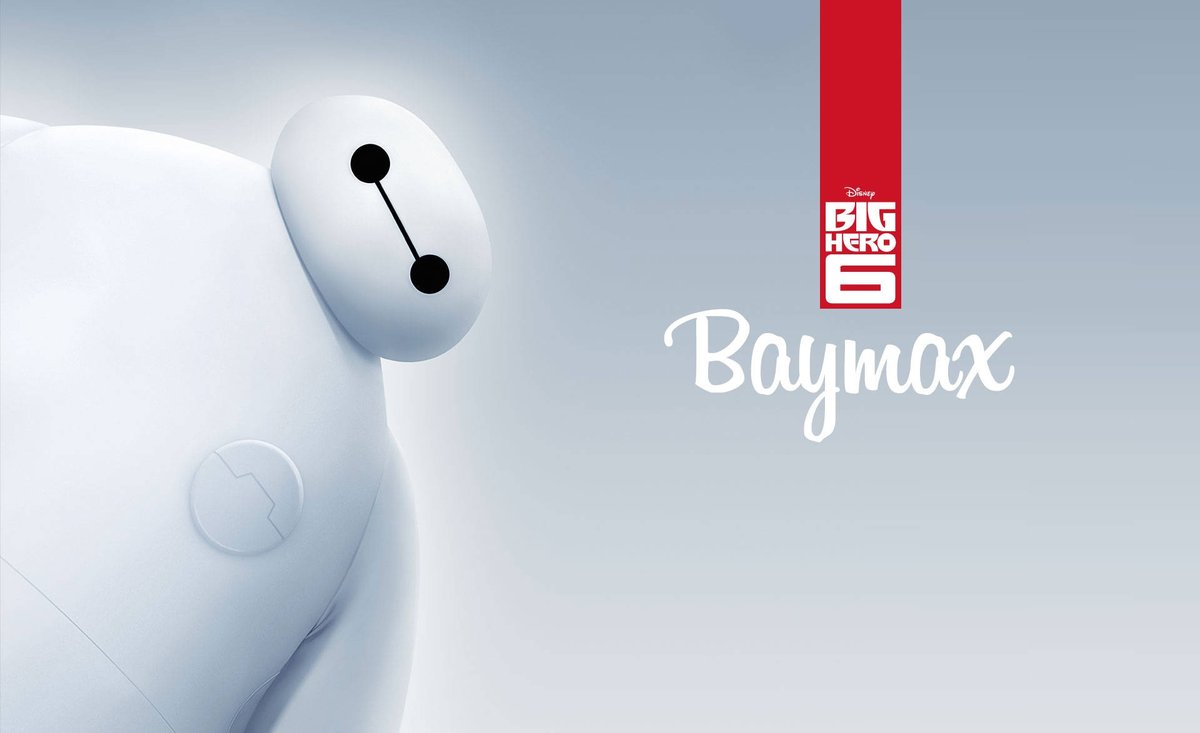
Baymax. The name itself conjures images of an impossibly cuddly, white, inflatable robot, instantly ready to offer a diagnostic scan or a comforting hug. But behind the deceptively simple exterior lies a profound narrative, exploring the intersection of technology, compassion, and heroism. Understanding The Creation and Significance of Baymax as a Healthcare Hero isn't just about appreciating a beloved Disney character; it's about recognizing a visionary concept that reimagines artificial intelligence as a force for pure good, ultimately defining what it means to care.
From his initial spark of innovation to his eventual role as a protector of San Fransokyo, Baymax embodies a future where advanced technology is seamlessly integrated with the most fundamental human need: well-being. This article will unpack his origins, trace his evolution, and examine the lasting impact of this unique healthcare companion.
At a Glance: Your Essential Guide to Baymax
- Born of Compassion: Created by Tadashi Hamada as a personal healthcare companion, designed for global health improvement.
- AI with a Heart: His core programming is a "caregiving matrix," summoning him to distress and deactivating only upon patient satisfaction.
- Medical Marvel: Equipped with thousands of procedures, advanced scanners, and even a heating system to treat nearly any ailment.
- Evolution to Hero: Reprogrammed by Hiro Hamada, he gains battle capabilities and armor, becoming a member of the superhero team Big Hero 6.
- Unwavering Morality: Programmed for selflessness and a vow to never harm humans, he prioritizes helping, even over direct commands.
- Symbol of Hope: Represents the potential for AI to provide empathetic, personalized care and inspire real-world technological advancements.
The Genesis of a Gentle Giant: Tadashi's Vision
Every hero has an origin story, and for Baymax, it begins with the brilliance and boundless empathy of Tadashi Hamada. A gifted student at the San Fransokyo Institute of Technology (SFIT), Tadashi envisioned a future where advanced medical care was accessible to everyone, everywhere. His dream wasn't just about technology; it was about genuine human connection and alleviating suffering.
Tadashi’s original concept for Baymax was revolutionary: a prototype healthcare-providing robot nurse, designed for mass production to improve global healthcare. He meticulously constructed Baymax using SFIT's cutting-edge equipment and funding, pouring his intellect and compassion into every circuit. The heart of Baymax’s artificial intelligence came from a special chip, inscribed by Tadashi himself, based on an SFIT thesis. This chip contained a unique "caregiving matrix," a complex set of algorithms and protocols designed to prioritize patient well-being above all else.
Baymax's functionality was brilliantly simple yet profoundly effective. He is summoned by the sound of distress, responding instantly to a cry of pain or a plea for help. And just as thoughtfully, his deactivation protocol is tied directly to the patient's consent and satisfaction: he will only power down when a patient explicitly states, "I am satisfied with my care." This unique design ensures that Baymax is not just a machine, but a devoted caregiver whose mission is complete only when the patient feels genuinely better. For a deeper dive into the visionary creator behind this remarkable robot, learn more about Tadashi Hamada and his enduring legacy.
More Than Just a Robot: Baymax's Core Character
While Baymax is a machine, his personality and actions often feel profoundly human. This is a testament to Tadashi's thoughtful programming and the character's subsequent development.
His primary directive—his job title, in fact—is "Healthcare Companion." In this role, he scans vital statistics, detects pain, and possesses the knowledge to treat nearly any ailment. What truly sets him apart, however, is his inherent disposition. Baymax is by design selfless, caring, and utterly devoted to his patients, driven by an overarching aim to improve world health.
Initially, Baymax is highly knowledgeable in medicine but displays a charming naiveté. He's slightly childlike in his understanding of human social norms, often not fully grasping personal space or patient willingness, always prioritizing the act of helping. His demeanor is calm, curious, and somewhat slow to process non-health-related information, adding to his endearing nature. This docile and gentle personality, characterized by soft-spoken politeness and attentive care, stems directly from Tadashi's healthcare chip.
Originally lacking human emotion, Baymax develops a remarkable capacity for empathy and forms a deep, close bond with Hiro. He becomes fiercely committed to Tadashi's ideals of help, not harm, which evolves into a profound understanding of right and wrong. This moral compass is so strong that he even disobeys Hiro at critical moments to uphold his core programming. His unwavering vow to never harm a human became a fundamental moral code, not just for him, but for the entire Big Hero 6 team, setting a powerful ethical standard for the use of advanced technology.
Anatomy of a Healthcare Hero: Design and Abilities
Baymax's physical form is as iconic as his personality. Hiro famously describes him as a "big marshmallow," and the description couldn't be more apt. He is an inflatable white robot, giving him a soft, non-threatening appearance that immediately puts patients at ease. Beneath this vinyl exterior are internal metal parts that provide structure and support, while his simple, black, oval eyes convey a surprising amount of emotion and focus. A badge-shaped access port on his left chest allows for the insertion of up to four cartridge chips, which store his core programming and capabilities.
In his original configuration, Baymax is a medical marvel. He is programmed with an astonishing 10,000 medical procedures, making him a walking, talking medical encyclopedia. His hands, for instance, house built-in defibrillators, while his fingers can dispense antibacterial spray. His body also incorporates a heating system, providing warmth and comfort to ailing patients. His advanced scanner is his primary tool, allowing him to quickly assess healthcare needs, accurately diagnose a wide range of ailments, and suggest appropriate remedies. Despite his immense capabilities, Baymax is bound by a crucial ethical constraint: he cannot act without patient consent, reinforcing the human-first approach Tadashi instilled in him.
While incredibly intelligent and well-equipped for care, his vinyl body is inherently vulnerable to physical damage. This structural weakness necessitates the development of protective battle suits for any situation beyond a calm clinic. His strength is also impressive, capable of lifting up to 1,000 pounds, but his initial design was clearly for care, not combat.
Evolution into an Action Hero: Baymax 2.0 and Beyond
Baymax's journey from a pure healthcare companion to a formidable superhero is a central arc in Big Hero 6. This transformation begins at the hands of Hiro, who, driven by grief and a thirst for justice, sees the potential to adapt Baymax's incredible intelligence and strength for a new purpose.
Hiro's initial "reprogramming" focuses on giving Baymax practical combat abilities. This includes equipping him with a powerful rocket fist and enhancing his already impressive strength. For mobility and evasion, Hiro integrates rocket thrusters, granting Baymax the ability to fly. The first iteration of his combat gear is a prototype dull-green armor, designed for karate practice. This armor provides essential padding and damage resistance, allowing Baymax to withstand tougher situations than his original vinyl body ever could.
However, it's his definitive superhero form, affectionately dubbed "Baymax 2.0," that truly completes his transformation. This sleek, protective armor is a striking red and purple, a stark contrast to his soft white form. It's not just cosmetic; this suit significantly enhances his capabilities:
- Flight: Foot-equipped rocket thrusters and back-mounted wings enable sustained flight, making him highly agile in aerial combat.
- Enhanced Strength: The armor amplifies his already considerable strength, allowing him to engage formidable foes.
- Fighting Capabilities: Integrated into the armor, these provide defensive and offensive maneuvers.
- Advanced Scanning: His helmet incorporates an enhanced scanning system, crucial for identifying threats and analyzing environments.
- Rocket-Fists: These become a signature offensive move, capable of delivering powerful, long-range strikes.
In the later Big Hero 6: The Series, Baymax receives further upgrades, including an "overdrive mode." This advanced state transforms him into a super-powered robot, complete with an energy sword for close-quarters combat. However, such immense power comes with a trade-off: it quickly drains his batteries, highlighting the constant balance between ability and sustainability in technological design. This evolution showcases how Baymax, while retaining his core caregiving matrix, can adapt and grow to meet new challenges, embodying both compassion and courageous action.
Baymax's Journey in San Fransokyo: From Grief to Guardianship
Baymax's story truly takes flight within the vibrant, futuristic city of San Fransokyo, a place where tradition meets cutting-edge innovation. His first accidental activation by Hiro's cry of pain following Tadashi's tragic death sets in motion the events that shape his destiny and the formation of a new kind of superhero team.
In the immediate aftermath of his creator's demise, Baymax is accidentally re-activated by a grief-stricken Hiro. This accidental activation proves pivotal, leading them to uncover a sinister plot: Professor Robert Callaghan, masquerading as the villain Yokai, is mass-producing Hiro's revolutionary Microbots and was responsible for the fire that claimed Tadashi’s life. Baymax, true to his programming, first provides profound emotional comfort to Hiro in his raw grief, helping him process his loss.
Recognizing Baymax's potential, Hiro then upgrades him with battle programming and protective armor. With Baymax's help in contacting them, a diverse group of Tadashi's friends—the cheerful Honey Lemon, the speed-obsessed Go Go Tomago, the meticulous Wasabi, and the eccentric Fred—unite with Hiro and Baymax to form Big Hero 6.
A pivotal moment arises during a confrontation with Callaghan. Consumed by vengeance, Hiro commands Baymax to kill the professor. In an extraordinary display of his core programming, Baymax refuses, steadfastly upholding his vow to never harm a human. This moment underscores his unwavering moral code. Driven by rage, Hiro temporarily removes Baymax's healthcare chip, turning him into a violent, single-minded machine. However, the chip is soon restored, bringing Baymax back to his empathetic self. To prevent future manipulation, Baymax later locks his access port, a silent act of self-preservation to protect his core mission. He further comforts Hiro by showing him Tadashi's recorded footage, bringing Hiro back from the brink of emotional despair and reminding him of his brother’s true spirit.
In a dramatic climax, Baymax detects Callaghan's daughter, Abigail, alive but trapped within a collapsing portal. In an ultimate act of self-sacrifice, Baymax launches Hiro and Abigail to safety, seemingly perishing in the process. However, the story of Baymax doesn't end there. Hiro later discovers Baymax's original healthcare chip within his rocket-fist, a small but vital piece of his friend. Using this, Hiro meticulously recreates Baymax, restoring his personality, memories, and profound connection. Reunited, Baymax and the Big Hero 6 team reform, dedicated to protecting San Fransokyo, not just from supervillains, but also from everyday threats, embodying both the spirit of innovation and the power of friendship.
His adventures continue in Big Hero 6: The Series, where Hiro successfully rebuilds Baymax using his original chip. After an initial hiccup where Baymax's body goes haywire due to skipped diagnostics, he is fully restored. In one instance, a villain named Yama creates an army of Baymaxes using the original endoskeleton, which the heroic Baymax helps to defeat. With his friends, he becomes a full-time superhero, navigating the complexities of their powers and their personal lives. The Disney+ series Baymax! further spotlights him, focusing on his original mission as a compassionate healthcare hero, helping patients across San Fransokyo with their various ailments, both physical and emotional.
The Marvel Comics Counterpart: A Different Origin
While the Disney film introduced Baymax to a global audience, the character actually has roots in Marvel Comics, where his origin and capabilities are notably different. Created by Steven T. Seagle and Duncan Rouleau, the Marvel Comics version of Baymax first appeared in Sunfire & Big Hero 6 #1 in September 1998.
In the comic book universe, this Baymax was Hiro Takachiho's science project, specifically a hydro-powered robotic synthformer. His initial design was a comprehensive personal assistant: a bodyguard, butler, and chauffeur. However, his personal significance to Hiro deepened considerably when he was programmed with the brain engrams of Hiro's deceased father, Tomeo. This made Baymax more than just a robot; he became Hiro's best friend and a surrogate father figure, offering guidance and emotional support rooted in the memories of a loved one.
When Hiro was recruited for Big Hero 6, Baymax naturally joined him. The Marvel Baymax is incredibly versatile, possessing the ability to change forms, or "synthform," into various configurations:
- Large Humanoid: His standard, powerful robot form.
- "Battle-Dragon": A formidable reptilian form, enhancing his combat prowess.
- "Action-Mecha": A more vehicular or heavily armored configuration.
Beyond his shapeshifting, his abilities are equally impressive. He possesses phenomenal strength, making him a formidable combatant. His internal scanners and data analysis capabilities provide advanced surveillance and tactical information. For high-speed travel, he's equipped with jet engines, capable of reaching speeds up to Mach 4. Furthermore, Baymax is programmed with an extensive array of fighting techniques, including karate, tae kwon do, Western boxing, and Wing Chun, making him a highly skilled martial artist. His durable polymantium endo/exoskeleton provides significant resistance to small ballistics, adding to his robust defense. Crucially, he is linked to Hiro's Core Cyber-Network, allowing Hiro to remotely summon him whenever needed, ensuring Baymax is always there to protect his young creator.
Beyond the Screen: Baymax's Cultural Impact and Legacy
Baymax's appeal transcends the confines of Big Hero 6, making him a cultural icon recognized and loved worldwide. His gentle demeanor and unwavering commitment to care have resonated deeply with audiences, cementing his place in the pantheon of beloved Disney characters.
His influence extends across various media. He has made memorable cameo appearances in other Disney films, subtly integrated into the background of bustling scenes in Zootopia and virtually navigating the internet in Ralph Breaks the Internet. These brief but delightful appearances underscore his widespread recognition and integration into the broader Disney universe.
In the world of video games, Baymax is a popular character, lending his unique abilities to various titles. He's been a playable character in games like Disney Infinity 2.0 and 3.0, allowing players to experience his powers firsthand. His appearance in Kingdom Hearts III further expanded his narrative, integrating him into a complex crossover storyline. More recently, he even made a splash in Fortnite, bringing his heroic presence to one of the most popular online games.
Beyond screens, Baymax has come to life in tangible ways for fans globally. He features prominently as a highly sought-after meet-and-greet character at Disney Parks worldwide, offering heartwarming interactions and photo opportunities. His presence is also felt in park attractions, such as "The Happy Ride with Baymax" at Tokyo Disneyland, where guests can experience a joyful adventure inspired by the character.
Baymax stands as a powerful symbol of compassion, advanced artificial intelligence, and personalized healthcare. His creation sparked discussions about the ethical development of AI and its potential to serve humanity's most fundamental needs. He has inspired not only countless fans but also real-world robotics and medical innovation, challenging engineers and scientists to envision technologies that, like Baymax, are designed with empathy and patient well-being at their core. His legacy is one of hope, demonstrating that the most advanced technology can be wielded with the most profound kindness.
The Enduring Significance of Baymax: What He Teaches Us
The Creation and Significance of Baymax runs far deeper than just an animated story. He offers potent lessons that resonate in our increasingly technological world, inviting us to reflect on the future of AI, healthcare, and what it truly means to be a hero.
At his core, Baymax teaches us that empathy is the ultimate superpower. His programming is inherently empathetic, designed to detect and alleviate pain, both physical and emotional. He doesn't just treat symptoms; he cares for the whole person, demonstrating that true healing often requires comfort, understanding, and unconditional support. This human-first approach reminds us that technology, however advanced, should always serve to enhance our humanity, not diminish it.
He brilliantly showcases the profound potential of AI for good. In an era often fraught with anxieties about artificial intelligence, Baymax provides a comforting counter-narrative. He illustrates how AI, when programmed with ethical guidelines and a focus on well-being, can revolutionize healthcare, provide companionship, and even help us navigate complex emotions like grief. He's not a threat; he's a promise—a vision of AI as a selfless ally.
Baymax also serves as a poignant guide in navigating grief and emotional support. His role in comforting Hiro after Tadashi's death is one of the most powerful aspects of his character. He doesn't offer platitudes; he offers presence, a diagnostic approach to sadness, and a gentle push towards healing. His unwavering support helps Hiro move through his pain, not around it, highlighting the importance of acknowledging and processing loss.
Ultimately, Baymax expands our definition of heroism. He isn't born with powers in the traditional sense; his heroism stems from his commitment to others, his moral compass, and his willingness to sacrifice for the greater good. He shows us that heroism isn't just about fighting villains; it's about consistently choosing to help, to care, and to protect those who cannot protect themselves.
In a world grappling with complex technological advancements and ongoing societal challenges, Baymax stands as a beacon. He’s a call to envision a future where technology doesn't just solve problems, but genuinely serves humanity's deepest needs—for health, for comfort, and for connection. He reminds us that true innovation begins with compassion, and that the greatest creations are those that help us become more human.